How to Increase Local Traffic for Your USA-Based Business
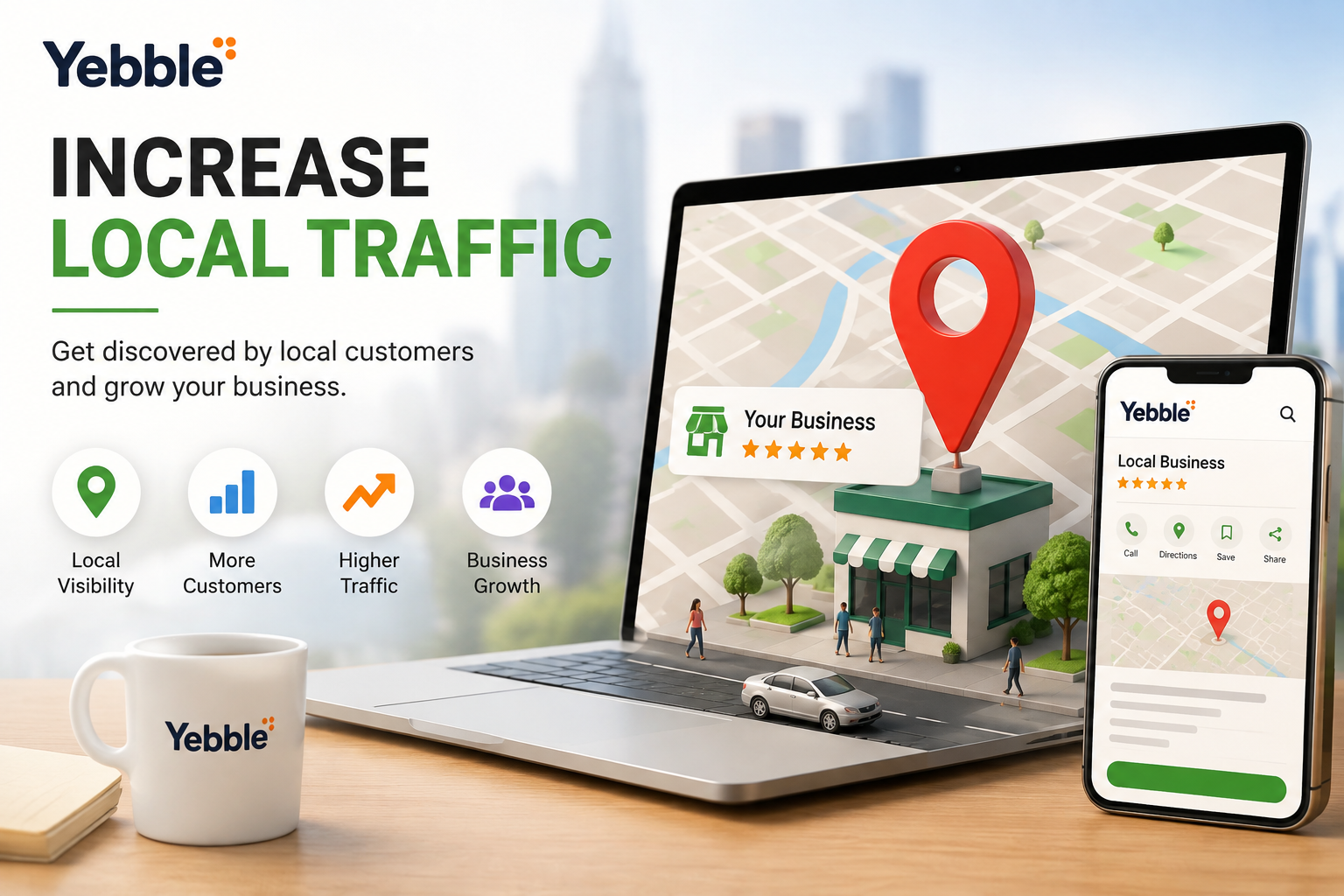
Foot traffic and local website visits don't happen by accident — they're the direct result of strategic, consistent local search optimization. Across the United States, businesses of every size are competing for the same pool of nearby customers, and only the ones that show up first in local search results are capturing that demand. That's exactly why so many business owners are learning how to increase local traffic, rather than relying on outdated advertising methods that no longer deliver a reliable return. Many of these owners have already tried print ads, generic social media boosts, or one-off promotions, only to find the results fade almost as quickly as the campaign ends. Whether you're running a single storefront or managing multiple locations across different states, the strategies in this guide will help you build sustainable, long-term visibility that consistently brings nearby customers through your door and onto your website.
Why Local Traffic Matters for US Businesses
Local search has become the primary discovery channel for millions of American consumers. People searching for "restaurants near me" or "best dentist in [city]" expect fast, relevant, and trustworthy results, and they rarely scroll past the first few listings. If your business isn't visible in those top spots, you're losing potential customers to competitors who invested in their local presence. To increase local traffic effectively, it helps to understand that search engines weigh three primary signals: relevance, distance, and prominence. Relevance determines how well your business matches a searcher's intent, distance accounts for how close you are to the person searching, and prominence reflects your overall online reputation and authority. Businesses that strengthen all three signals consistently see stronger, more reliable increases in both foot traffic and website visits. It's also worth noting that these signals interact with one another, so improving just one in isolation rarely produces the same results as addressing all three together as part of a coordinated strategy.
Optimize Your Google Business Profile for Maximum Visibility
A fully optimized Google Business Profile is one of the most direct ways to increase local traffic without spending a dollar on paid advertising. This free listing frequently determines whether a nearby customer chooses your business or a competitor's, so every detail matters. Fill out your business category, service areas, hours, and attributes completely, and write a clear, keyword-rich business description that reflects what you actually offer. Post regular updates about promotions, new products, or upcoming events, and upload fresh photos that showcase your storefront, team, and products. Businesses that keep their profiles active and accurate consistently rank higher in the local map pack, which translates directly into more phone calls, direction requests, and walk-in visits. Neglecting this listing is one of the fastest ways to lose ground to competitors actively working to increase local traffic to their own locations. Even simple additions, such as answering frequently asked questions directly on your profile, can reduce friction for potential customers and nudge them toward visiting sooner rather than continuing to search elsewhere.
Build Consistent NAP Citations Across the Web
Citation consistency plays a quiet but powerful role in local search rankings. Your business Name, Address, and Phone number (NAP) needs to match exactly across every directory, review platform, and social profile connected to your brand. Even small discrepancies, like an abbreviated street name or an outdated suite number, can confuse search engines and erode the trust signals they rely on. This is exactly where a platform like Yebble becomes genuinely useful, since it helps businesses identify citation errors, correct them at scale, and maintain consistency across hundreds of directories without the manual guesswork. Clean, uniform citation data reinforces your legitimacy in the eyes of search engines, making it considerably easier to increase local traffic in a way that compounds steadily over time rather than fluctuating unpredictably. Many businesses are surprised to discover just how many outdated or duplicate listings exist once they run a thorough citation audit for the first time.
Strengthen On-Page SEO With Local Intent
While off-page signals carry significant weight, your website's on-page structure still plays a major role in converting search visibility into real traffic. Title tags, meta descriptions, header tags, and body copy should all naturally incorporate location-specific language without feeling forced or repetitive. If you serve multiple cities or neighborhoods, create dedicated location pages with unique, locally relevant content rather than duplicating the same text across pages. Embed a Google Map on your contact page, ensure your NAP details appear clearly in your website footer, and implement schema markup so search engines can better understand your business type and service area. These technical refinements work together to increase local traffic by making it easier for both search engines and potential customers to find, understand, and trust your business. A fast, mobile-friendly website experience further supports these efforts, since a large share of local searches happen on smartphones while people are already out and about.
Earn Local Backlinks From Trusted Community Sources
Backlinks from locally relevant, reputable sources send a strong trust signal that search engines factor heavily into local rankings. Links from your chamber of commerce, community newspapers, local blogs, and industry associations tell search engines that your business is genuinely embedded in the community rather than simply optimizing from a distance. Sponsoring local events, partnering with complementary local businesses, or contributing expert insights to regional publications are all effective ways to earn these valuable links naturally. Each quality local backlink strengthens your prominence score and helps increase local traffic over time, especially when combined with accurate citations and strong on-page optimization. Steer clear of purchased or low-quality links, since these shortcuts can trigger penalties that quickly undo months of legitimate progress. A smaller number of genuinely relevant, community-based links will almost always outperform a large volume of generic ones, so prioritize quality and relevance over speed.
Leverage Reviews to Build Trust and Drive Visits
Customer reviews directly influence both your search rankings and the decisions potential customers make once they find your listing. A steady stream of recent, detailed, positive reviews signals strong prominence to search engines, while consumers rely heavily on reviews to decide which business deserves their time and money. Encourage happy customers to leave reviews on Google, Yelp, and platforms specific to your industry, and respond thoughtfully to every review, positive or negative. Mentioning your services and location naturally within your responses reinforces the same local relevance signals that help increase local traffic organically. Businesses that treat reputation management as an ongoing priority consistently outperform competitors who only address reviews when something goes wrong. A prompt, professional response to a negative review can often turn a frustrated customer into a returning one, while also demonstrating accountability to everyone else reading your profile.
Publish Hyperlocal Content That Connects
Generic content rarely drives meaningful local search performance. Instead, create content that speaks directly to your city, neighborhood, or region — blog posts about local events, guides highlighting nearby landmarks relevant to your industry, or stories featuring real local customers. Weaving in neighborhood names, regional references, and locally relevant details helps search engines confidently associate your business with a specific geographic area while genuinely resonating with the people reading it. This hyperlocal approach not only strengthens topical relevance but also builds authentic community engagement, both of which are essential if your goal is to increase local traffic in a way that lasts well beyond a single seasonal campaign or algorithm update. Sharing this content through local social media groups, community forums, and neighborhood newsletters can further extend its reach and generate additional engagement signals over time.
Track, Measure, and Grow With Yebble
Increasing local traffic isn't a one-time project — it requires continuous monitoring, testing, and refinement as competitors adjust their strategies and search algorithms evolve. This is exactly why growth-focused business owners rely on tools like Yebble to track performance, manage citations, monitor reviews, and uncover new opportunities before competitors do. Yebble brings together what would otherwise be a fragmented, time-consuming process into one centralized dashboard, giving business owners a clear, real-time view of what's working and what needs attention. Whether you're a single-location business just building your local presence or a multi-location brand scaling across several US markets, Yebble provides the structure, data, and ongoing insight needed to consistently increase local traffic. Instead of guessing which tactic deserves attention next, business owners gain a clear picture of where their listings stand, which citations need correcting, and where competitors are gaining ground. By combining a fully optimized Google Business Profile, accurate citations, strong local backlinks, positive reviews, and hyperlocal content — all tracked and refined through Yebble — your business will be well positioned to capture more local customers across the United States for years to come.
Follow this link for another blog - Improve Your Local SEO
