Why an Online Business Directory Belongs in Your Off-Page SEO Plan
Ask ten business owners what SEO means, and most will start talking about their website: the keywords, the page titles, the blog posts. That's a fair answer, but it's only half the story. A big part of how Google decides who to rank happens somewhere else entirely. That "somewhere else" is off-page SEO, and it covers every signal outside your own pages that tells search engines your business is real, active, and trustworthy.
Picture a new bakery opening on your street. The owner can hang as many signs as she likes, but you won't trust her sourdough until a friend mentions it, reviews start appearing, and the local paper stops by. Search engines think the same way. Links, mentions, reviews, and consistent business details are the digital version of word of mouth, and they carry serious weight.
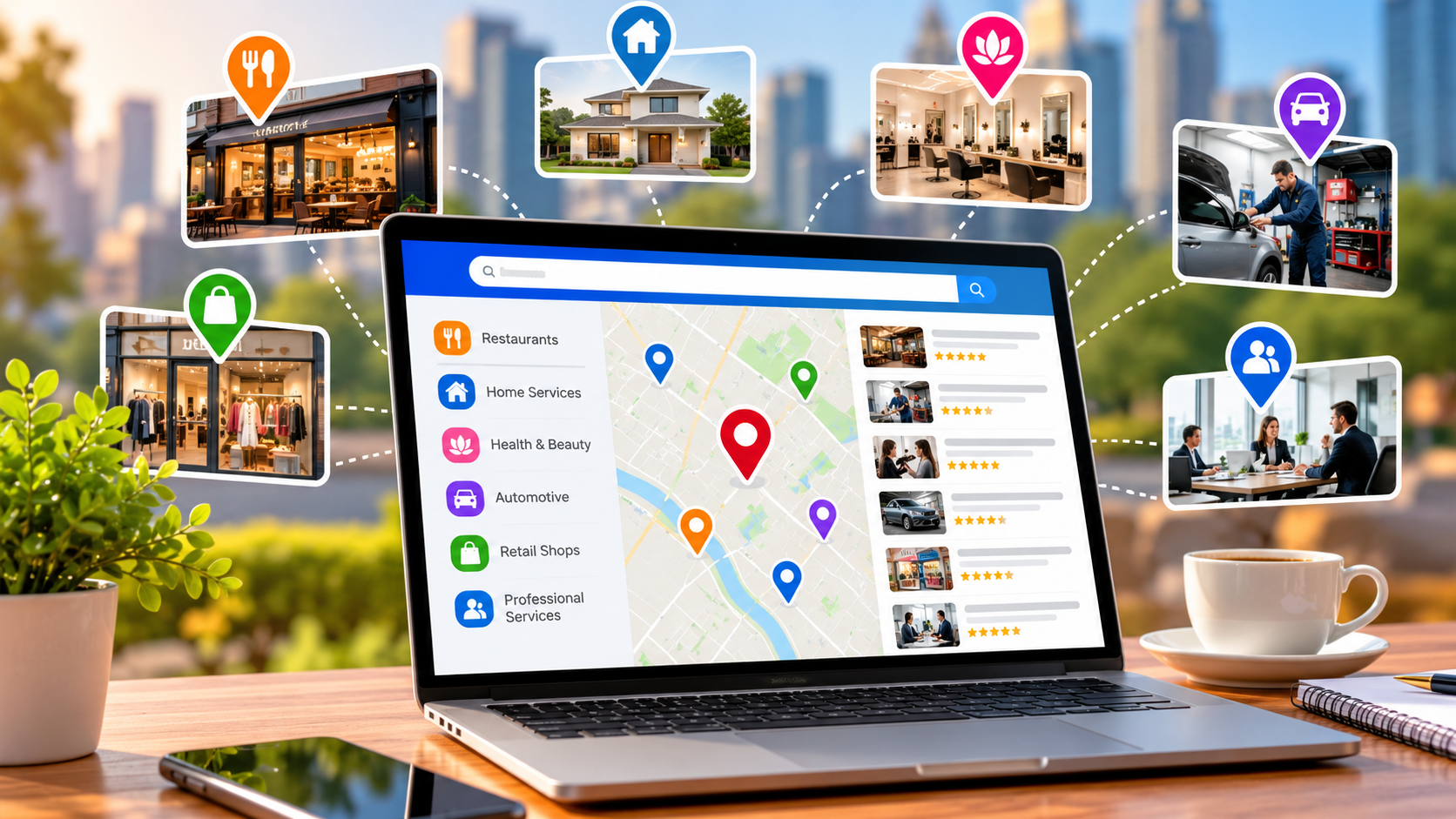
One of the simplest ways to start collecting those signals is an online business directory. A well-run online business directory gives your company a verified home on the web, sends interested visitors to your site, and confirms to search engines that your details are accurate. Best of all, it's affordable, and you can set up a solid profile in a single afternoon.
What Off-Page SEO Really Means
Off-page SEO is the work of earning trust beyond your own website. Backlinks get most of the attention, but brand mentions, social sharing, reviews, and business citations all play a part. Google can't visit your shop or chat with your customers, so it reads the internet's opinion of you instead. The more positive and consistent evidence it finds, the more comfortable it feels recommending you.
Think of your website as the storefront and off-page signals as the roads, reviews, and reputation that bring people to it. Without them, even a great page can sit unseen on the third page of results.
Small and local businesses feel this the most. A competitor with an average website but a strong off-site footprint can easily outrank a beautifully designed page that has no outside support. Adding your company to a reputable online business directory is one of the quickest ways to close that gap.
How an Online Business Directory Strengthens Your Rankings
A good listing works on several levels at once, which is why directories remain a staple of small-business SEO.
Consistent citations. Search engines cross-check your name, address, and phone number across the web. When an online business directory shows the same details as your website and Google Business Profile, it reinforces your accuracy. Inconsistencies do the opposite and can quietly hold you back.
Relevant backlinks. Most listings include a link to your site. One link won't transform your rankings, but a handful from respected, relevant sources adds up to a healthy backlink profile.
Referral traffic. People use an online business directory to compare options and decide who to call. Visitors arriving from a listing are often further along in their decision than random browsers, so they tend to convert better.
Brand visibility. Even when nobody clicks, seeing your name in several trusted places builds familiarity. Your listing works like a digital signpost pointing customers toward your door.
Review signals. Many directories let customers rate and review you. Fresh, authentic feedback tells search engines, and future customers, that your business is active and well regarded.
What to Look for Before You List
Not every listing site deserves your time. Some are little more than link farms, and being associated with them can do more harm than good. Before signing up, check a few things.
Start with relevance and audience. The best online business directory attracts real customers in your area or industry, not just other businesses chasing backlinks. Next, look at quality control. Directories that verify listings and remove spam protect their own reputation, and that reputation rubs off on you. Then examine the features: can you add photos, opening hours, service descriptions, and social links? Can customers leave reviews? The richer the profile, the more useful it is to visitors and search engines alike.
Finally, think about usability. A clean, mobile-friendly online business directory makes it easy to claim, edit, and update your information, which matters because outdated details frustrate customers and confuse search engines.
Practical Steps to Get More From Your Listing
Claiming a profile is only the beginning. Here's how to turn it into a real off-page SEO asset.
- Complete every field. Full descriptions, categories, photos, and opening hours outperform bare-bones entries. Treat your profile on an online business directory like a mini landing page.
- Write a unique description. Avoid pasting the same text everywhere. Explain what you do, who you serve, and what makes you different, and mention your city or neighborhood where it fits naturally.
- Keep your details identical. Use the exact same business name, address, and phone format on every platform. Small differences like "Street" versus "St." can create confusion.
- Encourage reviews. Ask happy customers to share their experience, and reply to every review, glowing or critical.
- Add real visuals. Photos of your storefront, team, and finished work build credibility in seconds.
- Revisit it regularly. Set a reminder every few months to check that hours, services, and contact details are current. An online business directory listing only helps when the information on it is accurate.
Pair these habits with other off-page efforts, such as local sponsorships, guest posts on community blogs, and partnerships with neighboring businesses. Your directory presence then becomes one strong piece of a bigger reputation-building puzzle.
Common Mistakes to Avoid
Even well-meaning owners slip up. Watch out for these.
Chasing quantity over quality. Submitting your site to hundreds of low-grade directories looks spammy. A few respected listings beat a hundred forgettable ones.
Ignoring duplicates. If you've moved or rebranded, old listings may still exist with outdated details. Track them down and merge or remove them, because duplicates dilute trust.
Setting it and forgetting it. Plenty of owners create a profile on an online business directory and never look at it again. Reviews go unanswered, hours become wrong, and the listing quietly loses value.
Over-optimizing. Stuffing your description with keywords reads badly and can raise red flags. Write for people first. If it sounds natural to a customer, it will usually sound natural to a search engine too.
Final Thoughts
Off-page SEO can feel abstract, but its purpose is simple: prove to search engines and customers that your business is credible. A trustworthy online business directory helps you do exactly that by delivering consistent information, relevant backlinks, and steady referral traffic. Combine a carefully managed listing with genuine reviews and community involvement, and your visibility grows in a way that lasts.
Ready to take the next step? Explore what Yebble offers, claim your listing, and start building an online presence that makes it easy for nearby customers to find you. A little consistency today can turn into a steady stream of leads tomorrow.
Follow this link for another blog - Local Business Directory